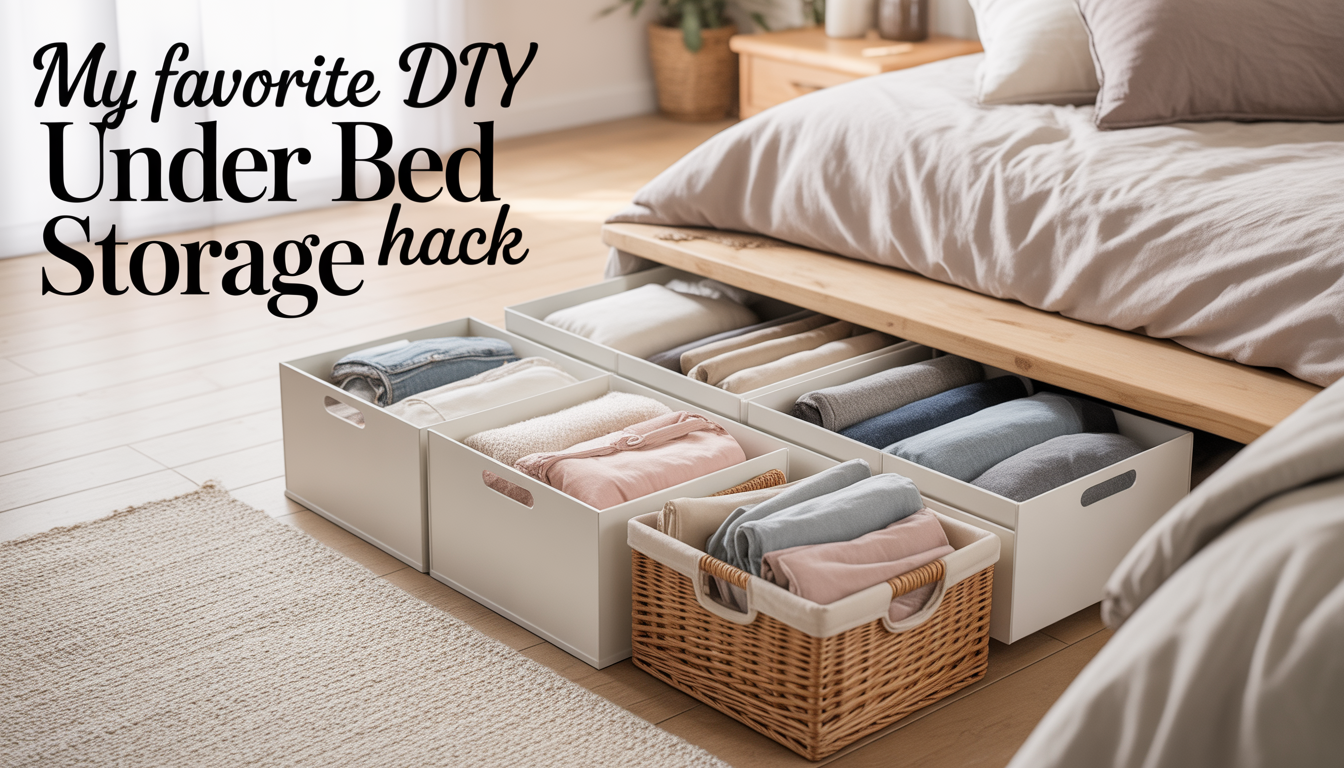
The “Void” is a universal human experience. It’s that dark, lawless frontier where charging cables go to die and where that one manual for a blender you bought in 2022 is currently gathering enough lint to knit a sweater. Most people solve this by buying those cheap, translucent plastic bins that crack the moment you look at them sideways. Not me. This year, I decided to lean into the 2026 DIY ethos of “Built to Last, Built to Repair.” I spent three weekends researching, sawing, and sanding my way to what I call the Ultimate Rolling Floating Drawer System. This isn’t just a box on wheels; it’s a custom-fit, sustainable, tech-integrated solution that actually makes use of every single square inch of floor space.
Why 2026 Is The Best Year To Finally Fix Your Storage Problems:
We are living in a bit of a golden age for the home tinkerer. If you’ve been following the news lately, you’ll know that the “Right to Repair” movement has finally hit the furniture industry with full force. As of early 2026, new regulations in the EU and several US states are pushing manufacturers to make products that aren’t just disposable. But more importantly for us DIYers, this movement has sparked a massive surge in the availability of high-quality, professional-grade components for the average person.
Just last week, on March 8, 2026, researchers in Finland announced a massive breakthrough in bio-based resins that are 76% stronger than traditional fossil-fuel epoxies. Why does that matter for a drawer under your bed? Because for the first time, we can get industrial-strength finishes and adhesives that don’t off-gas toxic chemicals into our bedrooms while we sleep. When I started this project, I made sure to source a bio-epoxy finish that used this new technology. It smells like a pine forest rather than a chemical factory, and the durability is honestly mind-blowing.
Beyond the materials, 2026 is also the year of “Warm Minimalism.” The cold, grey, industrial look of the early 2020s is officially out. We want wood grain, we want tactile textures, and we want things that look like they were made by a human hand, even if that human hand was slightly shaky after three cups of coffee and a run-in with a circular saw. My under-bed hack focuses on using sustainable timber that actually complements your room’s aesthetic rather than hiding it behind a bed skirt.
The Research Phase And Why I Rejected Store-Bought Options:
Before I touched a single piece of wood, I did what any self-respecting obsessed hobbyist does: I spent forty-eight hours straight looking at “organized bedroom” hashtags until my eyes felt like they were vibrating. I looked at the “Smart Beds” with hydraulic lifts, which are cool until the motor dies and your mattress becomes a 200-pound trap. I looked at the fabric bags that zip up, which are great for dust but terrible for finding that one specific pair of jeans without dumping everything onto the floor.
The problem with almost every commercial solution is the “Generic Fit.” Bed frames are like snowflakes, no two are the same height or width. If you have a 7-inch clearance and you buy a 6-inch bin, you’re leaving an inch of wasted space. If you buy an 8-inch bin, you’re now lifting your entire bed on those sketchy plastic risers that feel like they’ll collapse if you sneeze too hard.
My research led me to the conclusion that a rolling drawer system is the only way to go, but with a twist. Traditional drawers use side-mount slides that require a heavy outer carcass. In the cramped world under a bed, a carcass is just more wasted material. My “Floating” design uses high-performance, silent casters, the kind they use on film sets for camera dollies, and a specialized “Anti-Dust” lip that seals against the bed frame itself. This means no outer box is needed, saving weight and cost while maximizing the actual storage volume.
Selecting The Right Materials For A Healthy Bedroom Environment:
If you’re going to spend eight hours a day sleeping three inches above a storage unit, you need to be very careful about what that unit is made of. Most cheap plywood is held together by urea-formaldehyde resins. Over time, these chemicals leach into the air. In 2026, we have better options. For my build, I chose “PureBond” style plywood, which uses soy-based adhesives. It costs about 15% more, but considering it’s going under my head, it’s the best investment I’ve made this year.
I also wanted to incorporate the latest trend in “Adaptive Materials.” There’s a new type of lightweight aluminum alloy gaining popularity in the DIY world right now. It’s recycled, super tough, and incredibly easy to cut with a standard miter saw. I used these for the corner brackets to ensure the drawers stay perfectly square, even when they’re loaded down with fifty pounds of winter coats and old “National Geographic” magazines I refuse to throw away.
For the base, I went with 3/4-inch plywood. Many guides suggest 1/2-inch to save weight, but trust me, the moment you fill that drawer with books or heavy linens, a 1/2-inch bottom will bow like a cheap hammock. If you want this to last until 2030, go thick on the base.
Measuring Twice And Crying Zero Times:
The most common mistake people make with under-bed storage is forgetting about the “Leg Factor.” Most beds have middle support legs. If you build one giant drawer, you’ll get it halfway under the bed before it hits a support beam, and you’ll be left standing there in the dark, questioning your life choices.
I measured the “Inner Sanctum” of my bed frame and realized I needed four medium drawers instead of two large ones. This allows me to navigate around the support legs and also gives me better organization. One drawer is for shoes, one is for “Tech Graveyard” items, one is for linens, and the fourth is for my secret stash of snacks that I don’t want to share with my housemates.
Another pro tip: measure the height at multiple points. Floors aren’t level, especially in older houses. I found a 1/4-inch difference between the headboard side and the footboard side. I designed my drawers to have a 1/2-inch “Safety Gap” at the top to account for this. There is nothing more frustrating than a drawer that fits perfectly in the morning but gets stuck at night because the house “settled.”
The Step-by-Step Build Process For The Rolling Floating Drawers:
First, I cut my base plates. Using my circular saw with a fine-finish blade (don’t use a framing blade unless you want your edges to look like they were chewed by a beaver), I ripped the plywood into four identical rectangles. I made sure to sand the edges immediately. In 2026, I’m using the new “HEPA-Sanders” that connect directly to a vacuum. If you don’t have one, please wear a mask. Sawdust is not a seasoning.
Next came the side walls. I kept them about two inches shorter than the total clearance under the bed. This is crucial because you need room for the casters. For the joinery, I avoided nails. Nails pull out over time. I used pocket-hole screws and that Finnish bio-resin I mentioned earlier. The combination of a mechanical fastener and a high-tech adhesive means these drawers are basically indestructible. I could probably use them as a makeshift raft if the local river ever overflows.
The most satisfying part was installing the casters. I didn’t go for the cheap ones from the hardware store bin. I went for “Polyurethane Swivel Casters” with ball bearings. These are the secret sauce. They move silently over hardwood floors and don’t leave those annoying black streaks. I positioned them about two inches in from each corner to give the drawer that “Floating” look. When the drawer is pushed in, you can’t see the wheels at all. It just looks like a sleek wooden panel hovering above the floor.
Adding The 2026 Smart Twist With Motion Sensor Lighting:
Since we’re living in 2026, a “dumb” wooden box just didn’t feel right. I wanted something that felt a little more “High-End Hotel” and a little less “Basement Workshop.” I decided to integrate low-profile LED strips along the bottom edge of the bed frame, synced to a motion sensor on the drawer itself.
Now, whenever I pull a drawer out, a soft, warm glow (around 2700K for that cozy vibe) illuminates the floor. It looks incredible, but it’s also practical. No more fumbling with a phone flashlight at 6:00 AM, trying to find a matching pair of socks. The power comes from a small, rechargeable lithium-polymer battery pack tucked into a hidden compartment in the back of the drawer. Thanks to the energy efficiency of modern LEDs, I only have to charge them once every three months.
I also added a “Digital Index” tag to each drawer. Using a simple NFC sticker on the handle, I can tap my phone and see a list of everything inside that specific drawer. No more opening all four drawers to find the Christmas lights. I just scan the handle, and my phone tells me, “Yep, they’re in Drawer 3, buried under the spare duvet.”
Dealing With The Ultimate Enemy, Which Is Dust:
If you put anything under a bed, the “Dust Gods” will find it. It is an unavoidable law of physics. However, you can make their job much harder. I added a “Gasket Seal” to the top edge of my drawer fronts. I used a simple strip of adhesive-backed felt that matches the wood. When the drawer is closed, the felt presses against the bed frame, creating a nearly airtight barrier.
For the top of the drawers, I didn’t want a permanent lid because that makes access annoying. Instead, I crafted “Floating Lids” out of a breathable, sustainable linen fabric stretched over a light wooden frame. This keeps the dust off the clothes but allows the wood to “breathe,” preventing that musty “attic smell” that usually haunts under-bed storage.
I also did a deep dive into the latest 2026 “Anti-Static” finishes. I found a spray-on coating that actually repels dust particles using a microscopic ionic charge. I applied it to the underside of the bed frame and the exterior of the drawers. It’s been three weeks, and so far, the dust bunnies have been unable to gain a foothold. It’s like a force field for my floor.
The Aesthetic Finish And The Power Of Personalization:
To make the drawers look like a part of the room, I used a “Shou Sugi Ban” inspired technique, but without the actual fire (my landlord is very strict about “controlled burns” in the bedroom). I used a high-contrast wood stain and then sanded it back to reveal the natural grain, giving it a weathered, organic look. This fits perfectly with the 2026 “Earthy Luxe” trend.
For the handles, I didn’t want bulky metal hardware that I would inevitably stub my toe on in the middle of the night. I opted for “Integrated Finger Pulls.” I used a router to carve a smooth, curved groove into the top of the drawer front. It’s sleek, it’s modern, and it’s completely toe-safe.
The final touch was the “Modular Divider” system. I didn’t just throw everything into the big open box. I used thin strips of cedar wood to create adjustable compartments. Cedar has the added benefit of naturally repelling moths and smelling fantastic. I can move the dividers around depending on whether I’m storing bulky sweaters or a collection of vintage gaming controllers.
Why This Project Changed My Relationship With My Space:
Building these drawers wasn’t just about “storage.” It was about reclaiming a part of my home that had become a source of low-level anxiety. Every time I looked under the bed, I felt a sense of failure, a reminder of things lost and clutter ignored. Now, I feel a sense of pride. I know exactly where everything is, and the act of pulling out a perfectly balanced, silent, glowing drawer is weirdly therapeutic.
In 2026, we are all looking for ways to make our lives a little more intentional. We’re moving away from the “Buy it and Bin it” culture of the 2010s. This DIY hack is a testament to that shift. It’s a project that used sustainable materials, embraced the latest technical research, and solved a real-world problem with a bit of human ingenuity (and a lot of bio-resin).
If you have a weekend and a few basic tools, I cannot recommend this enough. Don’t let the “Void” win. Build your own kingdom under your mattress. Just make sure you measure for those support legs first, or you’ll be spending your Sunday afternoon in a very frustrated state of mind.
FAQs:
1. What is the best wood to use for under-bed storage in 2026?
Sustainable birch plywood with soy-based adhesives is currently the gold standard for bedroom health.
2. How do I prevent the drawers from scratching my hardwood floors?
Always use high-quality polyurethane casters instead of hard plastic or metal wheels.
3. Can I make these drawers if my bed is very low to the ground?
You can use “Low Profile” ball-bearing rollers, which only require about half an inch of clearance.
4. How do I stop my cat from hiding behind the drawers?
Ensure your drawer fronts are wide enough to flush against the bed frame legs to block access.
5. Are the motion sensor LEDs difficult to wire for a beginner?
Not at all, as modern 2026 kits are “Plug-and-Play” with simple adhesive backings and USB-C charging.
6. How much does this DIY project usually cost?
Depending on the wood quality, you are looking at roughly $80 to $150 for a full set of four drawers.
Leave a Reply