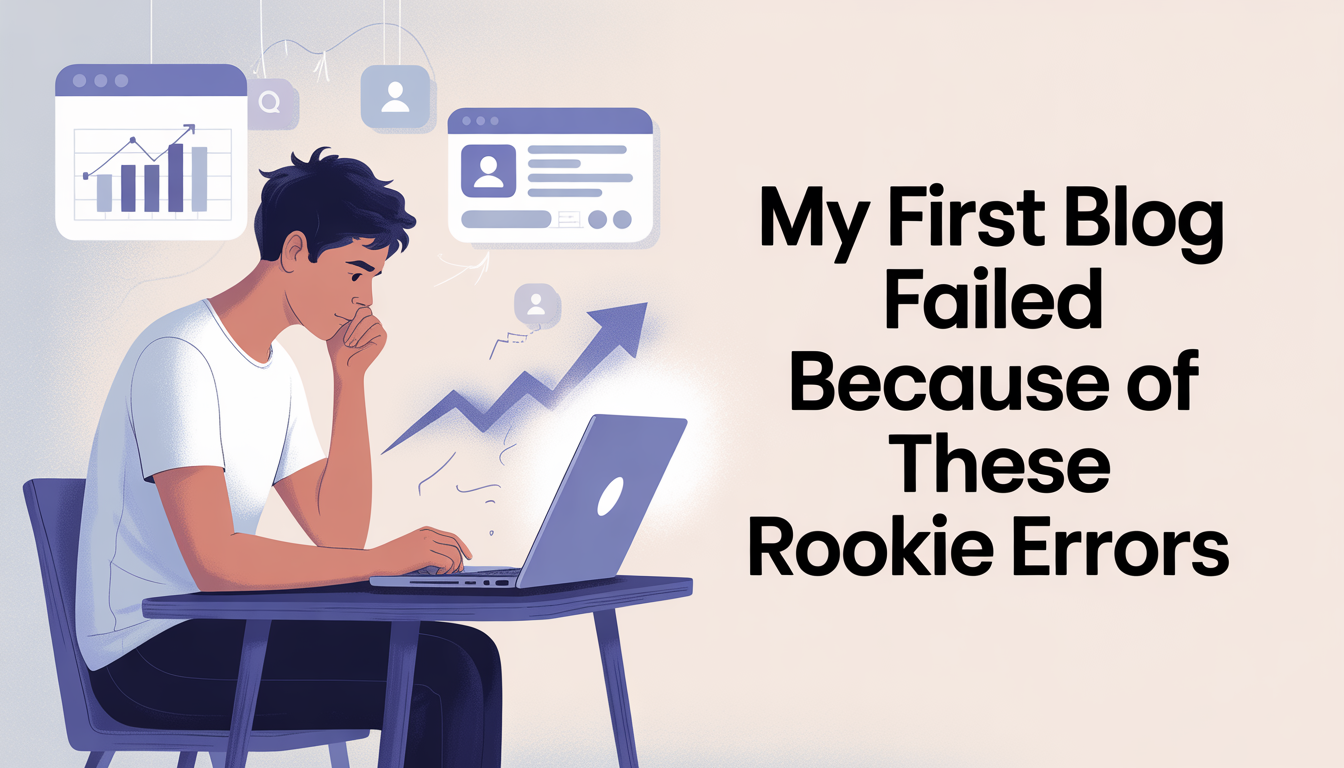
I once spent three hours crying over a WordPress plugin. Not because it was broken, but because I realized I’d spent eight months building a blog that even my cat wouldn’t read. I named it “Chronicles of a Modern Dreamer,” which tells you everything about why it failed, vague, pretentious, and absolutely meaningless to anyone but me. If you’ve ever stared at your analytics dashboard wondering if the zero was broken, welcome to the club. I made every rookie error in the book, so you don’t have to.
The Dream That Died in the Dashboard:
When I launched my first blog in 2020, I was convinced I was different. I’d read the horror stories about failed blogs, but those were other people, people who didn’t have my passion, my work ethic, or my unique perspective. I was going to be the exception.
I picked a free hosting platform because I didn’t want to “waste money” until I knew blogging was “for me.” This was my first rookie blogging mistake, and it was a doozy. The site loaded slower than a sloth on sleeping pills. Every time I tried to customize something, I hit a paywall. I couldn’t install basic plugins that would have made my life easier, and the platform slapped their branding all over my site like graffiti on a clean wall.
But I persisted. I spent weeks designing the perfect logo, turquoise and gold, very spiritual, when I should have been researching my audience. I wrote my first post, a 600-word ramble about “finding yourself in the chaos of modern existence.” It got three views. Two were me checking if it was published correctly, and one was my mom, who later admitted she “skimmed it.”
I told myself patience was key. Rome wasn’t built in a day. But here’s what nobody told me: Rome had a blueprint. I was just stacking bricks in the dark and hoping they’d form something recognizable.
The Fatal Flaw of Writing for Ghosts:
My biggest beginner blogger error was writing for an audience of one, myself. Every post was a diary entry disguised as advice. “Why I Love Sunday Mornings” and “Thoughts on Rain” might have been therapeutic to write, but they solved exactly zero problems for anyone else.
I never stopped to ask who I was writing for. When I finally did some audience research, way too late, I realized my scattered topics appealed to no one in particular. One day, I wrote about vegan recipes, the next about productivity hacks, then about my favorite books. I was a lifestyle blogger without the lifestyle or the audience.
The blogs that succeed have one thing in common: they know exactly who they’re talking to. They understand their readers’ pain points, dreams, and daily struggles. I didn’t know my reader because I hadn’t defined them. I was shouting into a void and expecting applause.
The SEO Blindspot That Kept Me Invisible:
I thought SEO was something only tech people worried about. I figured if I wrote good content, by my own definition of good, Google would magically find me and send floods of traffic. This was like opening a restaurant in a back alley with no sign and wondering why nobody showed up for dinner.
My posts had no keyword research behind them. I didn’t know what terms people were actually searching for, so I couldn’t optimize my content to match. My headlines were clever but not searchable. “Dancing with the Dawn” sounds poetic, but nobody is typing that into Google looking for morning routine tips.
I also made the common blogging mistake of ignoring technical SEO basics. My images were massive and uncompressed, slowing my already-glacial site even more. I had no meta descriptions, no alt text, no internal linking strategy. To Google, my site was basically invisible, and not in a cool, mysterious way.
When I finally installed Google Analytics and Search Console, the data was devastating. My average position for every keyword was beyond page ten. I was ranking for “modern dreamer chronicles”, my blog name, and literally nothing else. That’s not SEO; that’s brand recognition from the three people who knew I had a blog.
The Consistency Conundrum:
For three months, I was a machine. I published twice a week, every week, convinced that volume would conquer all. Then life happened. I missed a week, then two, then a month went by with nothing. When I returned, I expected my audience to welcome me back with open arms. Instead, I found crickets.
Inconsistent publishing is a death sentence for new blogs. Google favors sites that update regularly. Readers forget about you if you disappear. I had no editorial calendar, no backlog of content, no system for batching work. When inspiration dried up, so did my output.
The successful bloggers I now know treat content creation like a job, not a hobby. They plan months ahead. They write when they don’t feel like it. They show up consistently because they understand that blogging consistency builds trust with both readers and search engines. I treated my blog like a creative whim, and it performed exactly as you’d expect.
The Monetization Mirage:
About six months in, I decided it was time to make money. I’d heard about bloggers earning thousands from affiliate marketing, so I slapped Amazon links into every post. “Thoughts on Rain” suddenly included a paragraph about my favorite umbrella, with a commission link that made me feel slightly dirty.
I made $2.34 in three months. Two dollars and thirty-four cents. I couldn’t even cash out because Amazon’s minimum threshold is $10.
My monetization strategy was non-existent because I had no strategy at all. I hadn’t built enough traffic to make ads worthwhile. I had no products or services to sell. My affiliate promotions were random and inauthentic, stuffed into content where they didn’t belong.
The worst part? I was so focused on making money that I stopped focusing on making value. Every post became a thinly veiled sales pitch. My already-small audience sensed the desperation and vanished. I was trying to harvest crops from seeds I hadn’t even planted yet.
The Comparison Trap That Crushed Me:
I made the rookie error of comparing my month-two blog to someone else’s year-five success. I’d scroll through Pinterest, seeing income reports of $10,000 months and wonder what was wrong with me. Why wasn’t my traffic growing? Why wasn’t I going viral? Why did my Instagram following stall at 47 people, most of whom were bots?
This blogger comparison trap is toxic and everywhere. What I didn’t understand then was that those successful bloggers had made the same mistakes I was making, they’d just made them years earlier. They’d failed, learned, pivoted, and persisted. I was comparing my beginning to their middle, which is like watching an Olympic swimmer and wondering why you sink when you jump in the pool.
The comparison made me desperate. I tried every trend I saw. When listicles were popular, I wrote listicles. When video content took off, I tried vlogging despite hating being on camera. When someone said Pinterest was the secret to traffic, I spent weeks learning the platform, only to abandon it when the next shiny object appeared.
I had no content strategy, just a series of reactive tactics borrowed from other people’s playbooks. A blog built on imitation lacks authenticity, and readers can smell it from a mile away.
The Technical Terrors I Ignored:
My blog was a technical disaster, and I was too proud to admit I needed help. When my site crashed, which it did frequently, I spent hours in forums trying to fix it myself instead of paying an expert $50 to solve it in ten minutes. I thought I was being resourceful; I was actually being penny-wise and pound-foolish.
I didn’t understand the importance of website speed optimization. My images were straight from my phone, unoptimized and massive. My hosting was the cheapest option available, which meant shared servers and frequent downtime. I had no caching plugin, no content delivery network, and no security measures.
Mobile optimization? What’s that? I designed everything on my laptop and never checked how it looked on phones. Turns out, 60% of my tiny traffic was mobile, and they were getting a broken, unreadable experience. No wonder they didn’t stick around.
Backups were something I knew I should do, but never actually did. When I finally decided to migrate to self-hosted WordPress, a good decision made way too late, I lost three months of content because I hadn’t properly exported my data. Poof. Gone. Like it never happened.
The Community I Never Built:
Blogging felt incredibly lonely because I made it that way. I never commented on other blogs in my niche. I didn’t join blogging communities or Facebook groups. I saw other bloggers as competition rather than potential collaborators.
This isolation was self-imposed and self-defeating. When I finally started connecting with other bloggers, after my first blog had already flatlined, I discovered how generous the community actually is. They share advice, promote each other’s work, and provide emotional support during the inevitable rough patches.
I also failed to engage with the few readers I did have. When someone commented on my posts, rare as it was, I rarely responded. I didn’t have an email list because I thought newsletters were “old school.” I wasn’t on social media consistently because I found it overwhelming.
A blog without a community is just a website. The magic happens in the relationships between blogger and reader, between blogger and blogger. I was so focused on creating content that I forgot to create connections.
The Pivot That Finally Happened:
After ten months of struggle, I did something radical: I stopped. I took a month off from blogging entirely to reassess. I asked myself hard questions. Did I actually want to do this, or did I just want the results I’d seen others achieve? Was I willing to learn what I didn’t know, or was I going to keep faking it?
The honest answers were yes, I wanted this, but no, I wasn’t willing to keep doing it wrong. I spent that month consuming every resource I could find about blogging best practices. I took a course on SEO. I read books about content marketing. I studied successful blogs in niches I actually cared about and analyzed what made them work.
I realized my “Modern Dreamer” concept was too vague to ever succeed. I needed specificity. I needed to solve real problems for real people. I needed to treat this like a business if I wanted business results.
When I relaunched, new domain, new hosting, new niche, new attitude, I applied every lesson I’d learned the hard way. I chose profitable blogging niches with clear audience demand. I did keyword research before writing a word. I set up proper analytics from day one. I created an editorial calendar and stuck to it. I built an email list immediately. I engaged with my community constantly.
The difference was night and day. My new blog got more traffic in its first month than my old blog got in its entire existence. By month six, I was making steady affiliate income. By month twelve, I’d quit my day job.
The Rookie Errors I Now Teach Others to Avoid:
Now, as someone who mentors new bloggers, I see these same beginner blogging mistakes everywhere. The free hosting trap. The “write, and they will come” delusion. The inconsistency. The premature monetization. The comparison trap. The technical neglect. The isolation.
I tell them what I wish someone had told me: blogging is simple but not easy. The concepts are straightforward: create valuable content, optimize for search, build community, and monetize ethically, but the execution requires discipline, patience, and continuous learning.
I emphasize the importance of niche selection more than anything else. Your niche determines your audience, your content, your monetization options, and your longevity. Get this wrong, and everything else is uphill. Get it right, and you have a foundation to build on.
I also stress the value of investing in your business from the start. Not recklessly, don’t go into debt, but don’t cheap out on the essentials. Good hosting, a professional theme, and basic tools are non-negotiable. You wouldn’t open a brick-and-mortar store with a cardboard sign and folding chairs; don’t do the digital equivalent.
The Mindset Shift That Changed Everything:
The biggest transformation wasn’t tactical; it was mental. I stopped seeing myself as a blogger and started seeing myself as a business owner. This meant making decisions based on data, not feelings. It meant showing up even when I didn’t feel inspired. It meant investing in growth rather than hoarding every penny.
I developed what I call the “CEO mindset.” Every morning, I ask: What is the highest-value task I can do today to move my business forward? Sometimes that’s writing content. Sometimes it’s networking. Sometimes it’s learning a new skill. Rarely is it checking social media or tweaking my logo for the hundredth time.
I also embraced failure as feedback. Every post that flopped taught me something about what my audience didn’t want. Every technical disaster taught me a new skill. Every month of low revenue motivated me to optimize my monetization. Failure wasn’t the opposite of success; it was part of the process.
The Systems That Saved My Sanity:
My first blog failed partly because I had no systems. Everything was ad hoc, reactive, and chaotic. Now, I run my blogging business with military precision, not because I love bureaucracy, but because systems create freedom.
I batch my content creation. One day per week is for writing, another for editing, another for promotion. I use project management tools to track my editorial calendar, my affiliate relationships, and my outreach efforts. I automate what I can, social media scheduling, email sequences, and backup processes, so I can focus on high-value activities.
I also systematized my learning. The blogging world changes fast, so I dedicate time each week to staying current. I follow industry blogs, listen to podcasts, and participate in mastermind groups. I’m not trying to figure everything out alone anymore.
The Content Strategy That Actually Works:
Gone are the days of “Dancing with the Dawn.” My content now follows a strict strategy based on search intent and audience needs. Every post targets a specific keyword that my ideal reader is actually searching for. Every post solves a specific problem or answers a specific question.
I use the pillar content strategy, creating comprehensive guides that cover broad topics in depth, then linking shorter posts back to these pillars. This builds topical authority and keeps readers on my site longer. I also update old content regularly, ensuring nothing becomes stale or irrelevant.
My headlines are no longer clever; they’re clear. They promise specific value and deliver on that promise. “How to Start a Blog in 2024: The Complete Beginner’s Guide” might not win poetry awards, but it gets clicked by people who need exactly what I’m offering.
The Traffic Strategy Beyond Google:
While SEO is crucial, I learned not to put all my eggs in one basket. I now diversify my traffic sources. Pinterest drives significant visitors to my visual content. My email list, built from day one with a valuable lead magnet, provides consistent, engaged traffic. I guest post on other blogs to reach new audiences. I appear on podcasts in my niche.
This multi-channel traffic strategy protects me from algorithm changes. When Google updates hit, my business doesn’t collapse because I have other sources of visitors. It also builds a more resilient brand presence across the web.
The Monetization Model That Makes Sense:
I completely revamped how I make money. Instead of random affiliate links, I create resource pages and tool recommendations that genuinely help my audience. I only promote products I use and believe in. My affiliate income increased tenfold when I stopped trying to sell everything and started curating carefully.
I also developed my own digital products, templates, guides, and courses that solve specific problems for my readers. This product-based monetization gives me control over my income and builds deeper relationships with my audience. I’m not just sending traffic to Amazon anymore; I’m building my own ecosystem.
Sponsored content came later, once I had the traffic and authority to command decent rates. I choose partners carefully, ensuring alignment with my values and my audience’s needs. Every sponsored post provides genuine value, not just a sales pitch.
The Team I Eventually Built:
My first blog was a solo operation, which limited its growth. Now, I have a small team that helps me scale. A virtual assistant handles administrative tasks. A freelance writer contributes content in areas where I’m not the expert. A graphic designer creates visuals better than I ever could.
This delegation was hard for me, I’m a control freak by nature, but essential for growth. I had to accept that done is better than perfect, and that other people can do certain tasks better than me. My role shifted from doing everything to overseeing strategy and creating my highest-value content.
The Metrics That Matter:
I stopped obsessing over vanity metrics like page views and social media followers. Now I track what actually matters: email subscribers, conversion rates, revenue per visitor, and return visitor percentage. These blogging KPIs tell me if my business is healthy, not just if it’s popular.
I review these metrics weekly, monthly, and quarterly, adjusting my strategy based on what the data shows. This analytical approach keeps me objective and prevents me from chasing trends or making emotional decisions.
The Lessons I Carry Forward:
My first blog died so my future blogs could live. Every error I made taught me something invaluable about what not to do. The free hosting disaster taught me to invest in quality infrastructure. The vague niche taught me the power of specificity. The inconsistent publishing taught me the value of systems and discipline.
I don’t regret the failure. I regret not failing faster, staying stuck in a losing strategy for ten months when I should have pivoted after two. But that’s the nature of rookie errors: you don’t know what you don’t know until the consequences slap you in the face.
Now, when I see new bloggers making these same mistakes, I want to shake them gently and say, “There’s a better way.” But I also know they might need to learn some lessons themselves. Failure is a powerful teacher, even if it’s an expensive one.
Conclusion:
My first blog was a beautiful disaster that taught me everything about what not to do. The rookie errors I made, free hosting, no niche, ignoring SEO, inconsistent publishing, and writing for myself, are common because they’re easy to fall into. But they’re also avoidable with the right knowledge and mindset. Learn from my mistakes, skip the crying-over-WordPress phase, and build something that lasts.
FAQs:
Q1: What’s the biggest mistake new bloggers make?
A: Writing for themselves instead of solving problems for a specific audience.
Q2: Should I start with free hosting?
A: No—invest in quality hosting from day one; it’s essential for speed, control, and professionalism.
Q3: How long before a blog makes money?
A: Typically 12-18 months if done right, but many give up before reaching profitability.
Q4: Is SEO really necessary for beginners?
A: Yes, without basic SEO, Google won’t find your content, no matter how good it is.
Q5: How often should I publish new posts?
A: Consistency beats frequency—one quality post per week is better than five rushed ones.
Q6: When should I start monetizing my blog?
A: Wait until you have steady traffic (at least 10,000 monthly visitors) and focus on value first.